
Introduction
ZINFI's escalation management approach via the UPM Support application ensures that unresolved problems don't linger and issues are promptly addressed. Through the Support application, you can define the criteria for escalation — such as missed deadlines — and outline the appropriate action required to resolve issues, such as a change of status or a notification to an organizational member or partner.
Monitor and Manage Situations
The first goal of the Support application is to restore normal service as quickly as possible and minimize the impact on business operations, ensuring that the best possible levels of service quality and availability are maintained. UPM's Support application allows your organization to identify, track, monitor, and manage situations that require attention and action.
The issue and action item management process followed by the Support application consists of the following sequential steps:
- Identification and ticket creation
- Validation and prioritization
- Analysis
- Tracking and reporting
- Escalation (if needed)
- Resolution and closure
- Customer satisfaction
- Increased productivity
- Searching the Library
- Faster Resolution
Customer Insights
See who your partners are and who you're communicating with. Add tasks and notes, see previous tickets, and get to know your customers better to increase the quality of your organizational support. Easily track response times from ticket creation to ticket modification, filter tickets for problem-specific support, and exchange comments on individual tickets in the Comments section with file uploads.
UPM's Support provides metrics and analytics through UPM's EDISON around the performance of your team — letting you gain valuable insight at a glance. Monitor metrics such as tickets closed, the average time to resolve issues, and more. This lets you know when someone on the team is falling behind so you can address the issue before it escalates further.
- Track Times
- Prioritize issues
- Knowledge Base
- Reduced Ticket Backlog
Manage Support Tickets
Support Tickets
To access the Support Tickets module:
- Click on Community in the top navigation menu.
- Click on Manage Support Tickets in the left menu bar.
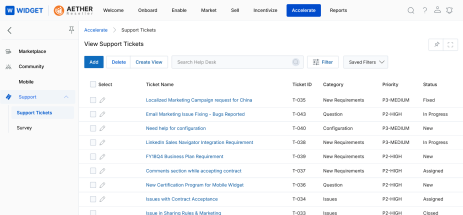
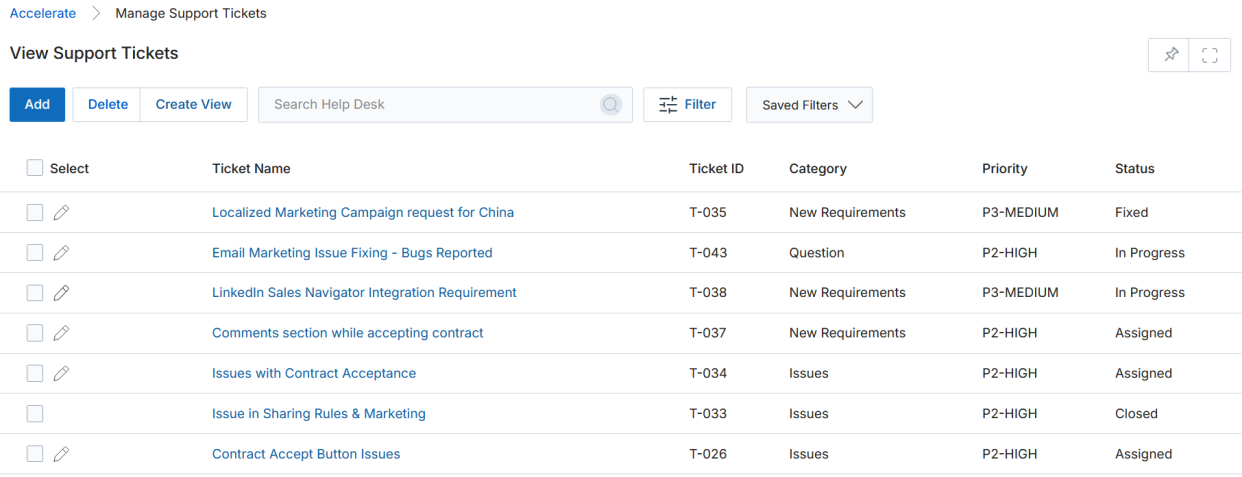
View Support Tickets
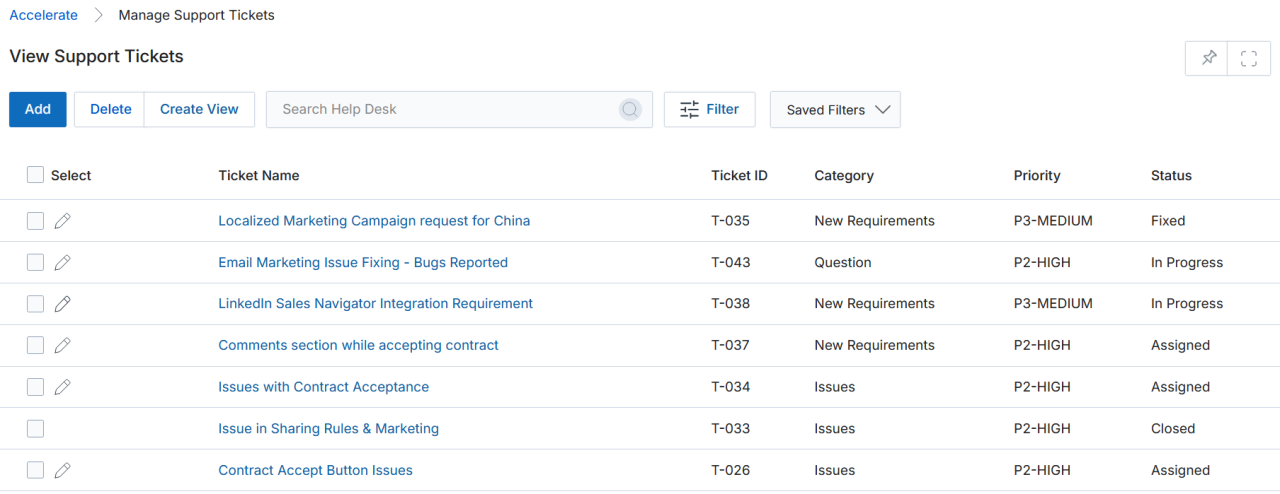
The View Support Tickets page lists all support tickets. The top of the page provides the following actions:
| Action | Description |
|---|---|
| Add | Opens a new page to add a new ticket record. |
| Delete | Deletes the selected record(s) from the listing page. |
| Create View | Lets you create a custom view with the specific set of columns you need. |
| Filter | Opens a pop-up window where you can enter search criteria to find specific records. |
For each record in the grid:
- Edit (Pen icon) — Lets you edit the selected record. The pen icon is not visible if the ticket's Status is Closed.
- Any linkable item — Clicking a linked ticket name or field takes you to its details page.
Create New View
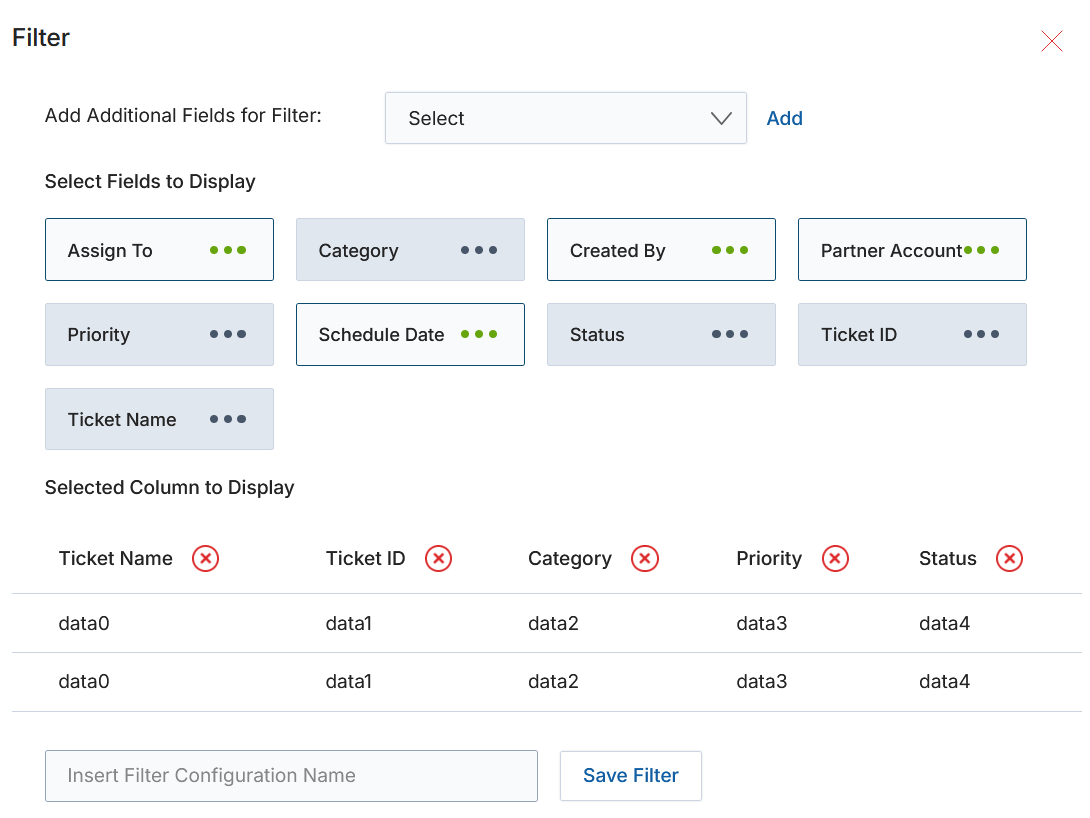
The Create New View / Filter function lets you configure a custom column layout for the ticket list. To create a custom view:
- Click Create View at the top of the View Support Tickets page to open the Filter dialog.
- Use the Add Additional Fields for Filter dropdown to choose a field, then click Add.
- In the Select Fields to Display area, click the Green Dots (•••) next to any field to select it. Available fields include: Assign To, Category, Created By, Partner Account, Priority, Schedule Date, Status, Ticket ID, and Ticket Name.
- Selected columns appear under Selected Column to Display with a preview. To remove a column, click the × button next to it.
- Enter a name in the Insert Filter Configuration Name field, then click Save Filter to save the custom view.
View Ticket Details
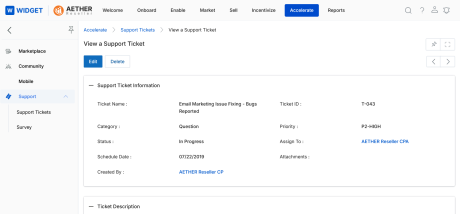
To open a ticket's detail page, click on the Name/Title of any ticket in the View Support Tickets list.
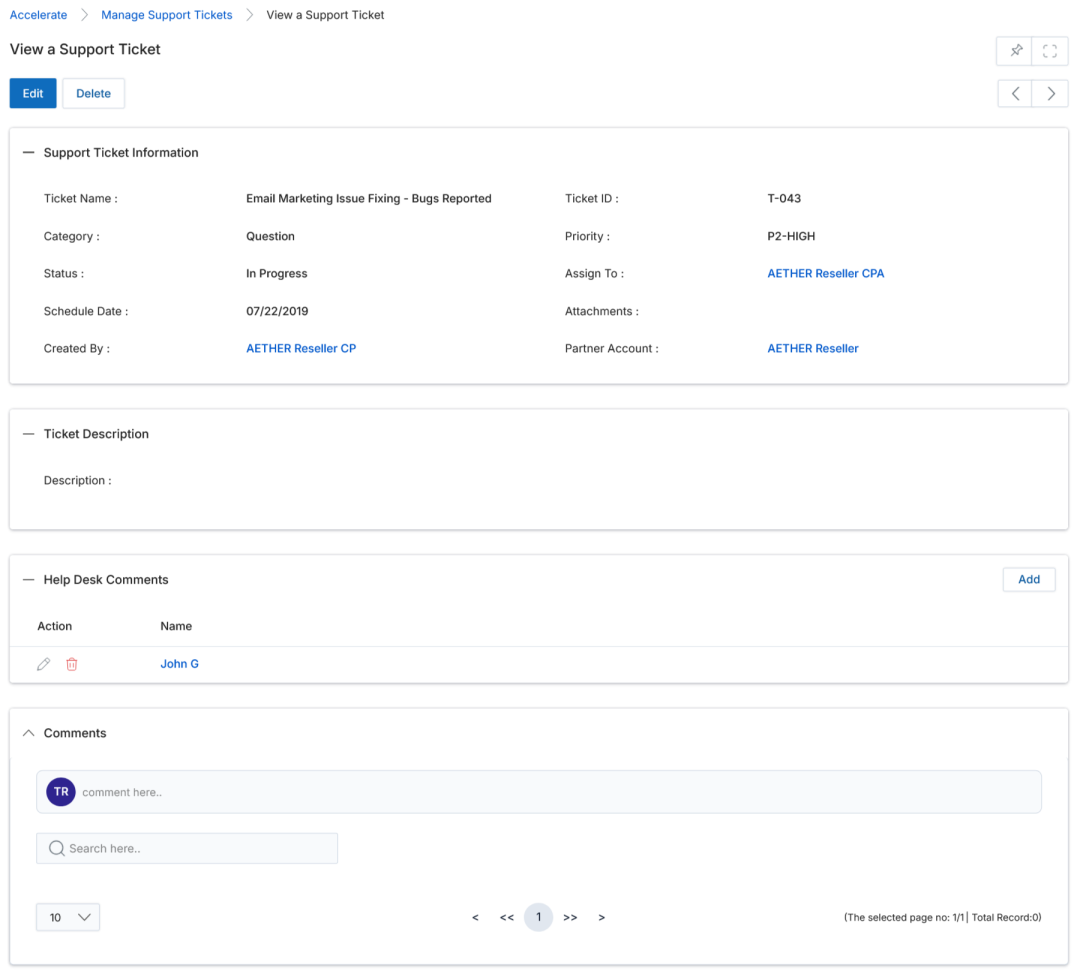
Once in the View Support Ticket page, the top of the page provides:
- Edit — Opens the record in Edit mode.
- Delete — Permanently deletes the selected record from the list.
Support Ticket Information Fields
| Field | Description | Available Values |
|---|---|---|
| Ticket Name | User-friendly name to quickly identify the ticket. | Free text |
| Ticket ID | System-generated unique number to identify the ticket. | Auto-assigned (e.g., T-043) |
| Category | Category/type of the ticket. | New Requirements, Issues, Design Change Request, Configuration, Question |
| Priority | Priority level of the task associated with the ticket. | Urgent, High, Medium, Low, Enhancement |
| Status | Current status of the ticket. | New, Assigned, In Progress, Fixed, Closed |
| Assign To | The assignee responsible for completing the task mentioned in the ticket. | Select from user list |
| Schedule Date | Target completion date for the task mentioned in the ticket. | Date picker |
| Attachments | Files or documents associated with the ticket. | File upload (Browse) |
| Created By | Displays the user who created the ticket. | Auto-populated |
| Partner Account | The partner account associated with this ticket. | Select from partner list |
Ticket Description
The Description field contains the full description of the task to be fulfilled — including context, reproduction steps, or detailed requirements.
Comments
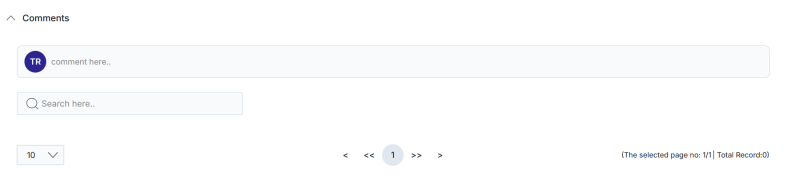
The Comments feature is a collaborative tool where users can share views, updates, and files with specific users or groups for a given ticket record. Comments provide a 1-dimensional thread of communication associated with the ticket.
To use Comments:
- Click on the Comments section to expand it.
- Write your message in the comment field. Attach single or multiple files if needed.
- Choose the Users/Groups you want to include in the communication.
- Click Post to publish the comment.
- View comments posted by others on the same thread below your entry.
Note on Comment Permissions:
- The owner of a record can view comments on that ticket.
- Users with admin permission can edit existing comments.
- Associated attachments can be downloaded by the viewer or owner.
Add / Edit a Ticket
To open the Add/Edit page:
- To add a new ticket — Click the Add button at the top of the View Support Tickets page.
- To edit an existing ticket — Click the small pencil (pen) icon next to the ticket in the list. Note: the pen icon is hidden for tickets with a Closed status.
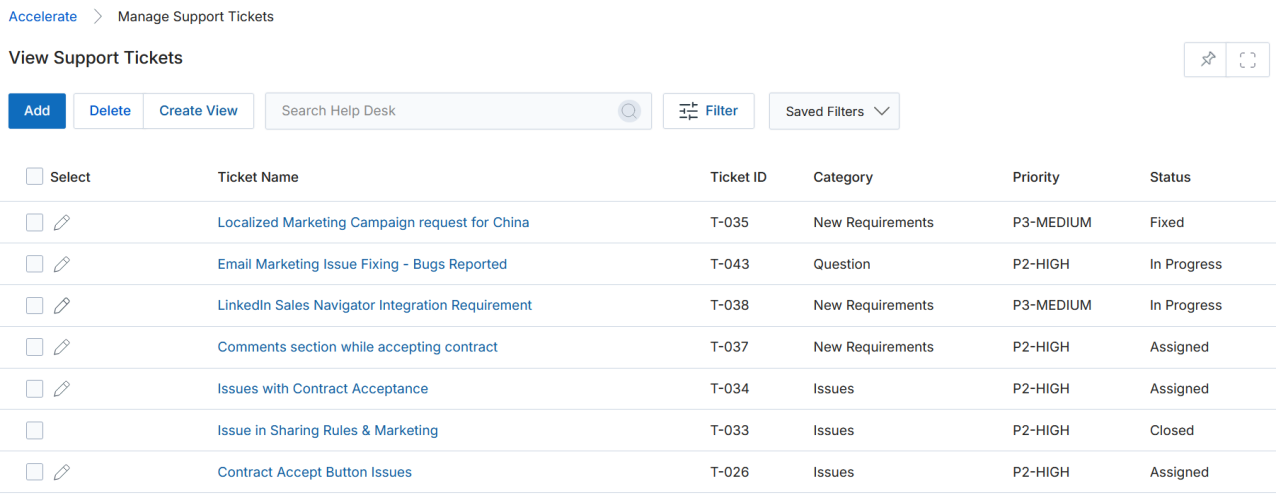
Add/Edit Form Fields
Once in the Add/Edit page, complete the Support Ticket Information fields (same as described in the View Ticket Details section above).
For the Assign To field:
- Click Select next to the Assign To field.
- A View Users popup appears — search or scroll through available users.
- Click the user's name to assign the ticket to them.
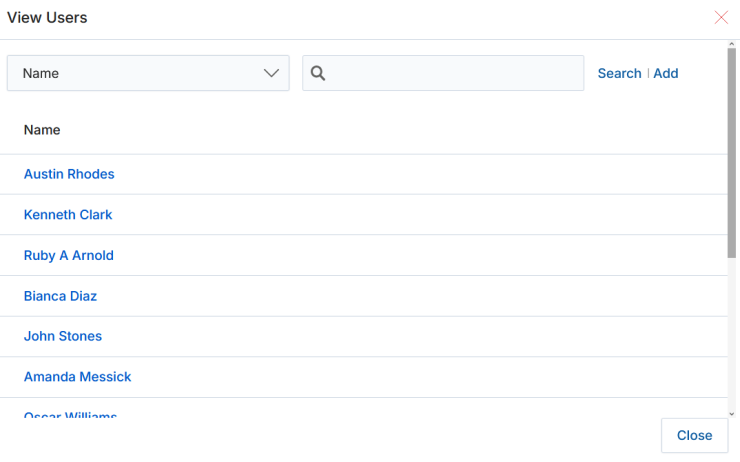
For Attachments, click Browse and upload files from an accessible folder on your machine. Multiple files can be attached.
Enter a full Description in the Ticket Description field. The rich text editor supports formatting, tables, and embedded images.
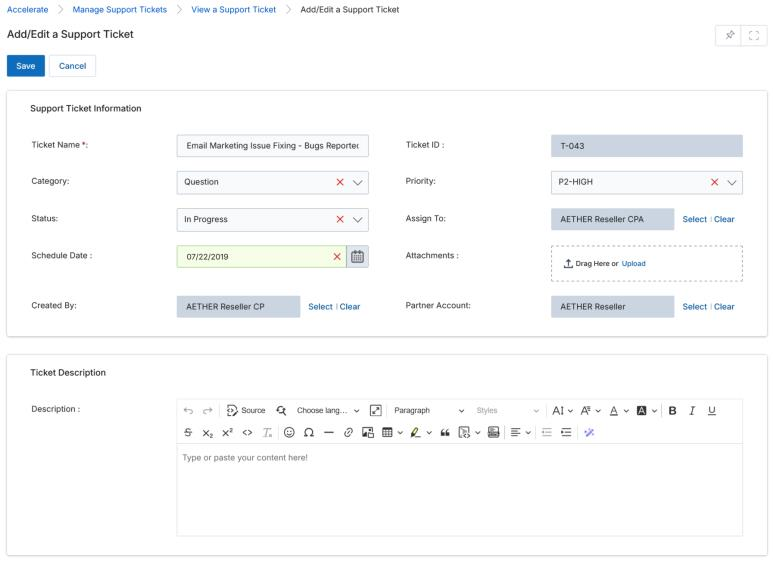
Saving your ticket: When done, click Save. This returns you to the View Support Tickets page. You can then re-open the ticket to add Comments, upload additional files, or make further edits. Once a ticket's Status is set to Closed, the edit (pencil) icon will no longer appear in the list.